
Shutter Realease #2 | FujiFilm FinePix S5500
A Retro Digital journey through London

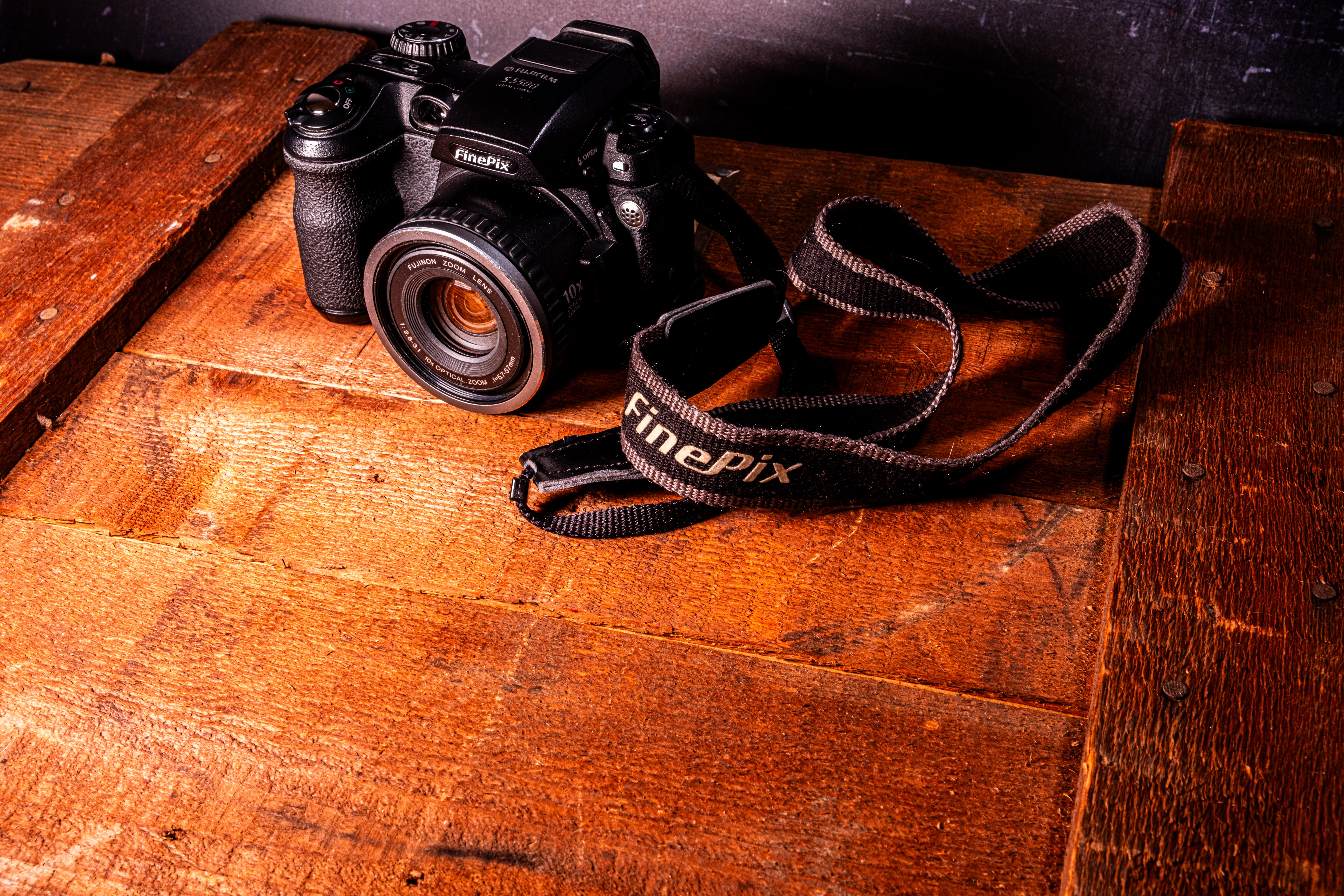
In the early days of consumer digital cameras (i.e. from the time when normal people could afford to buy them), the megapixel race towards ever more digital clarity was just warming up. This meant the FujiFilm FinePix S5500 wasn’t around for long. Boasting a whole megapixel extra, it was introduced as a replacement to the S5000 in 2004, before suffering the same fate a year later by a 5 megapixel beast, the S5600.


I wasn’t looking out for one of these cameras, rather it just fell in my lap when my Dad gave me his old one. But what possible use do I have for it? What good is an old, low megapixel, bridge camera in an arsenal of objectively superior DSLRs and Mirrorless cameras?
Nostalgia?
And then I stumbled across a couple of articles about old digital cameras and was surprised to learn people do look out for them. Amateur Photography talk about a desire to reconnect with cameras owned a hundred lifetimes ago but for me, this just doesn’t resonate. Although I have fond memories of my first digital camera, I don’t have a particular desire to rush out and shoot with it again.

What my Olympus 310z compact did do is hook me with instant photographic gratification. It set me on a journey of following one technological development after another which will last at least as long as the ability of my eyes to notice the difference.
Old Technology
On the other hand, 35mmc.com assert the older technology in itself is part of the appeal. The older CCD sensors produce lower dynamic range, incresed noise, poorer low light performance all leading to a desirable, film like aesthetic. Apparently.
So why not just retro out on film where, all lenses being equal, the look and feel is built into the film stock and that can be changed every 12, 15, 24 or 36 shots.
The camera
The FujiFilm FinePix S5500 doesn’t bristle with features by today’s standards. The ISO is between 64 and 400; the lens at its widest stops down from f2.8 to f8 and between f3.1 and f9 at the full extent of its 10x optical zoom. Finally, shutter speeds range between 15 seconds and a Pentax ME Super equalling 1/2000th.
From a practical viewpoint rather than a lithium battery, there’s only a compartment for 4 AA batteries. It also uses the now obsolete xD card, which are getting rarer (and more expensive) on eBay.
On the plus side, there’s a 37 to 370mmm full frame equivalent optical zoom and raw functionality to help get the best out of it. For the creatives, it offers full manual mode along with manual focus. Then there’s aperture and shutter priority and all the usual program modes.
Shooting experience
That said, manual is a bit fiddly so, during my photo walk around the Thames, I eventually just set the camera to Program mode. I think there is a reason for camera designers replicating old, mechanical SLR ergonomics. With controls literally placed at your fingertips, is there any real need to change the formula?
I don’t mind being slowed down by the photographic process, but I prefer this to be because of judging the light, composing the scene, being sure that it’s a good time to press the shutter because every frame cost money. I don’t like being slowed down by not remembering where in the menu the settings are.
What is interesting is that with only around 50 shots on a 512mb xD card, you do have to have some consideration for the shots you take. The scattergun approach here is probably out of the question.
Conclusion
This is a good camera, of that I have no doubt. I can’t say I am overly enamoured with the early digital aesthetic, hence why most of the shots today were converted to monochrome. I do prefer to use film for my journeys into the retro. But that’s just me.
Importantly, I had an enjoyable afternoon taking photos. The strength of the FujiFilm FinePix S5500 is its price of around £20 to £40 on eBay especially if you get a decent sized xD card with it. I wouldn’t shoot this for the look, but I would get one as a path into photography.